

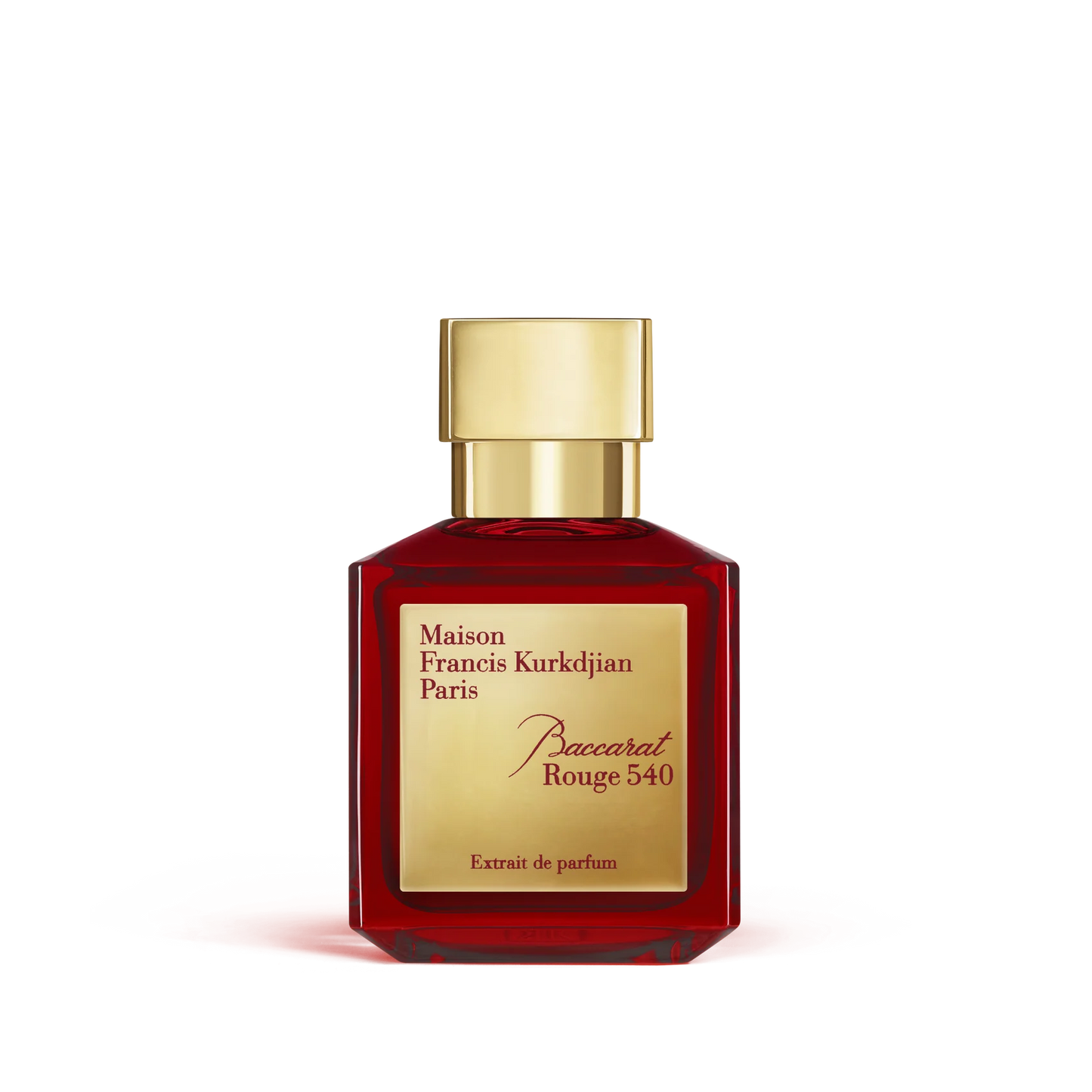
Maison Francis Kurkdjian Baccarat Rouge 540 Extrait de Parfum
Maison Francis Kurkdjian Baccarat Rouge 540 Extrait de Parfum

Floral

Ambery

Woody
It is also often called cashmere wood in reference to the enveloping softness it provides, reminiscent of musk, but more vibrant and uplifting, with woody undertones perceptible from top to base. It is a synthetic note that combines a dry and musky cedar facet with a warm cocooning effect close to musk, at once resinous and slightly powdery, leathery. Mingled with other woods, it intensifies the fragrance's sillage.
AmbroxanTM is obtained from sclareol, one of the natural constituents of clary sage. It was created in the 50s and gradually superseded ambergris, a natural excrement of the sperm whale. AmbroxanTM emulates its various amber, dry woody and mineral facets. It is a kind of super-potent woody note with a lingering sillage that adds a modern sensuality to any kind of composition. AmbroxanTM has spawned a large family of similar molecules, often called "amber woods".
Known by its Latin name as jasminum grandiflorum, the jasmine used in perfumery is surprisingly potent and multi-faceted, ranging from orangey-floral, solar, fruity (banana, strawberry, apricot), to animalic and spicy. Jasmine has an astonishingly complex structure for such a fragile flower that needs to be harvested very early in the morning before the sun spoils its fragrance. Its scent can only be extracted with volatile solvents and is very expensive due to its low yield of essential oil. Its kaleidoscope of nuances blends perfectly with other flowers as well as woods or ambery accords.
Coming from the pistil of a variety of crocuses, this most expensive spice in the world is nicknamed "red gold". Natural saffron is not used in perfumery because it contains safrol, a highly allergenic compound. But its effect is reproduced with one of its derivatives, saffronal. Its very powerful perfume is bitter and slightly metallic, blowing hot and cold on the rest of the composition with also a leathery, tarred facet. Francis Kurkdjian likes to use it in the top layer of a fragrance to break the sweetness of citrus notes. It is often associated with Oud-based perfumes and amber accords.
Total items
Product subtotal